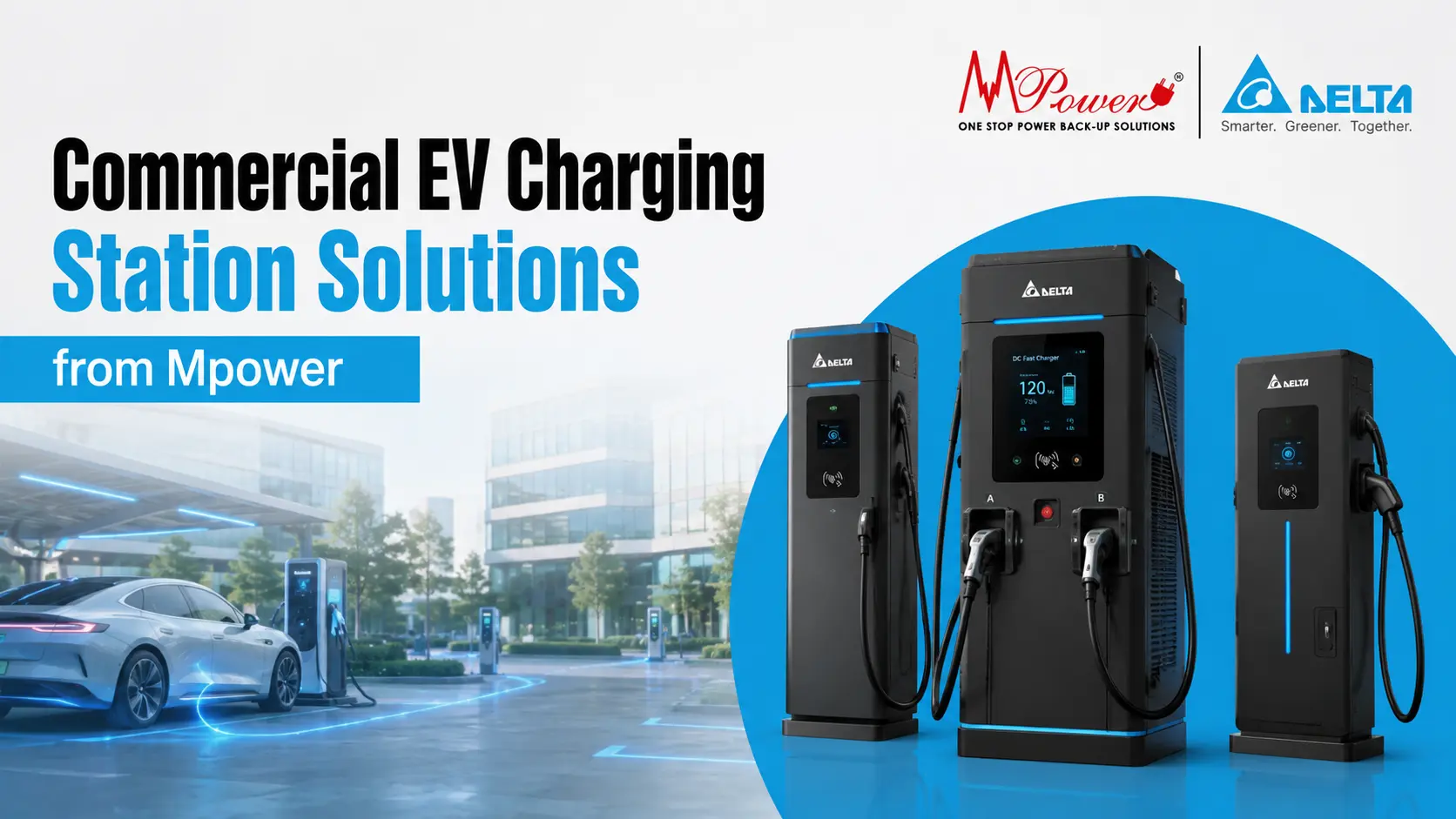
Smart EV Charging Infrastructure
Scalable EV charging infrastructure for businesses, fleets and public locations
A commercial EV charging station enables offices, fleet operators, property owners and public charging networks to provide dependable charging where electric vehicles already park, work or travel.
MPower India offers Delta AC and DC charging solutions from 22 kW to 200 kW. This range helps each site select the right charging speed according to vehicle dwell time, daily traffic, available electrical capacity and future expansion plans.
- 22–200 kW RangeAC and DC options for varied charging needs.
- Connected ManagementOCPP support for monitoring and control.
- Flexible ApplicationsWorkplace, fleet and public charging sites.
Commercial charging options for different site requirements
- 22 kWAC Smart
- 50 kWDC Wallbox
- 100 kWDC City
- 200 kWDC High Power
Why Businesses Are Investing in Commercial EV Charging
Electric mobility is changing how offices, malls, hotels, hospitals, fleet depots, fuel stations and residential communities plan their electrical infrastructure. Installing a commercial EV charging station allows a property to serve drivers where they already park, work, shop, stay or operate vehicles.
A well-designed site is more than a charger connected to the electrical supply. It requires the right charger type, power capacity, protection, networking, user access, load management, payment integration and provision for future expansion. Selecting a suitable system at the planning stage helps avoid underperforming chargers, overloaded electrical infrastructure and expensive redesigns later.
What Is a Commercial EV Charging Station?
A commercial EV charging station is an electric vehicle charging installation designed for shared, business, public or fleet use rather than charging a single privately owned vehicle at home. It may consist of one charger in an office car park or a network of AC and DC chargers serving many vehicles across a public charging hub.
Commercial installations commonly include user authentication, network connectivity, remote monitoring, charging session records, energy management and payment or billing functions. These capabilities allow the site owner to control access, track usage, manage operating costs and maintain reliable service.
The most suitable charger depends on how long vehicles normally remain parked. Locations with several hours of dwell time can often use AC charging effectively, while sites requiring rapid vehicle turnover benefit from DC fast charging.
Destination Charging
AC chargers are suitable where vehicles remain parked for longer periods, such as offices, hotels, apartments and business parks.
Fast Turnaround
DC fast chargers are designed for public stations, fleets, fuel stations and high-traffic sites where shorter charging sessions matter.
Connected Operations
OCPP-compatible chargers can connect with backend platforms for user management, monitoring, control, billing and reporting.
AC Versus DC Charging for Commercial Locations
Choosing between AC and DC charging is one of the most important decisions when planning a commercial EV charging station. AC chargers provide alternating current to the vehicle, where the onboard charger converts it to DC for the battery. A DC fast charger performs the conversion inside the charging equipment and delivers DC power directly to the vehicle battery.
| Comparison | Commercial AC Charging | Commercial DC Fast Charging |
|---|---|---|
| Typical MPower range | Up to 22 kW | 50 kW, 100 kW and 200 kW options |
| Best suited for | Longer parking and destination charging | Rapid charging and higher vehicle turnover |
| Common locations | Offices, hotels, apartments and workplaces | Public charging hubs, fleets, highways and fuel stations |
| Electrical demand | Lower demand per charging point | Higher site power requirement |
| Deployment approach | Multiple charging points across parking bays | Strategic installation in high-demand locations |
| Commercial objective | Amenity, employee charging and overnight fleet charging | Charge-to-go service, faster turnaround and public access |
Many projects use a mixed architecture. AC chargers serve vehicles parked for several hours, while one or more DC fast chargers support urgent charging and high-utilisation traffic. This blended approach can reduce unnecessary peak electrical demand while giving drivers access to the charging speed appropriate for their visit.
Commercial EV Charging Station Products from MPower India
MPower India offers a scalable Delta charger portfolio for businesses that need dependable equipment, intelligent connectivity and flexible charging power. The following products can support different commercial EV charging station configurations.
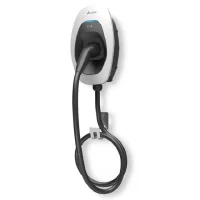
Delta AC MAX Smart – 22 kW AC EV Charger
The AC MAX Smart provides three-phase charging up to 22 kW with Ethernet, Wi-Fi and an integrated cellular modem. Its low standby consumption, compact design and indoor or outdoor suitability make it practical for offices, hotels, apartments, retail properties and workplace charging networks.
- Up to 22 kW three-phase AC charging
- Ethernet, Wi-Fi and cellular connectivity
- Remote monitoring and smart management support
- Compact plug-and-play deployment
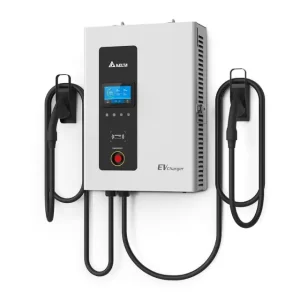
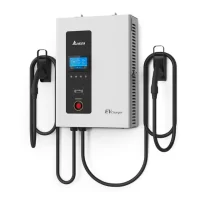
Delta DC Wallbox – 50 kW DC Fast Charger
The DC Wallbox 50 kW combines fast charging performance with a compact wall-mounted design. Dual outputs, simultaneous charging support, OCPP connectivity, remote monitoring and efficiency of at least 96% make it suitable for commercial sites where space and charging turnover are important.
- 50 kW DC dual-output charging
- Simultaneous charging support
- Compact wall-mounted installation
- OCPP, remote control and payment terminal support
Delta City Charger – 50 kW and 100 kW
The Delta City Charger supports 50 kW or 100 kW fast charging for public, fleet and commercial locations. It offers efficiency of at least 94%, simultaneous charging output, load distribution, outdoor adaptability and OCPP integration for connected charging operations.
- 50 kW and 100 kW configurations
- Outdoor all-weather design
- Simultaneous output and load distribution
- User, energy and remote management integration
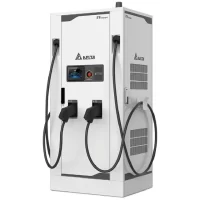
Delta City Charger – 200 kW
The 200 kW City Charger is designed for high-demand EV charging sites. It provides dual outputs, dynamic load distribution, OCPP compatibility, user identification, remote monitoring and efficiency of at least 96%, helping operators serve two charging connections efficiently.
- 200 kW high-power DC fast charging
- Dual outputs with dynamic load distribution
- At least 96% charging efficiency
- OCPP backend monitoring and control
Features a Commercial EV Charging Station Should Prioritise
Charging power is important, but it is not the only factor that determines whether a commercial EV charging station will remain reliable and manageable. Businesses should evaluate the complete operating environment before selecting equipment.
Correct Charging Power
Charger capacity should match vehicle dwell time, expected daily traffic and the electrical power available at the site. Oversizing can increase infrastructure cost, while undersizing may create queues and poor user experience.
OCPP Compatibility
OCPP enables the charger to connect with compatible backend systems for user authentication, charging records, billing, remote control and station monitoring.
Load Management
Dynamic or scheduled load management can distribute available power between chargers, reduce peak demand and support more charging points without uncontrolled electrical loading.
Remote Monitoring
Operators should be able to view charger status, session activity, alarms and performance remotely so that faults can be identified and addressed quickly.
Outdoor Durability
Public and parking-area equipment should be selected for the actual environmental conditions, including heat, dust, rain exposure and daily physical use.
Future Expansion
The electrical distribution, networking and physical layout should allow additional chargers to be added as EV adoption and site traffic increase.
Do Not Select a Charger Only by Its kW Rating
The success of a commercial EV charging station depends on site power, vehicle compatibility, charger utilisation, parking behaviour, network reliability, payment requirements and maintenance support. A site survey and load assessment should be completed before finalising the charger mix.
Where Commercial EV Charging Stations Can Be Installed
A commercial EV charging station can support customer service, fleet operations, employee mobility or direct charging revenue. The ideal charger type depends on how the property is used and how quickly vehicles need to return to service.
How to Plan a Commercial EV Charging Station
Planning should begin with the operating requirement, not the equipment catalogue. The following steps help create a safer and more scalable commercial EV charging station.
1. Study Vehicle Traffic and Dwell Time
Estimate how many vehicles will charge each day, the typical arrival and departure pattern, average parking duration and the expected growth in EV usage. These inputs determine whether the site needs AC destination charging, DC fast charging or a combination of both.
2. Assess the Electrical Infrastructure
Review the sanctioned load, transformer capacity, available distribution panels, cable routes, earthing, protection systems and spare capacity. High-power DC chargers can create substantial demand, making proper electrical design essential.
3. Define the Charger Mix
A workplace may install several 22 kW AC chargers, while a public site may require 50 kW, 100 kW or 200 kW DC charging. Combining charger types can balance capital cost, user convenience and power availability.
4. Plan Networking and Backend Operations
Decide how users will be identified, how sessions will be recorded, whether charging will be free or paid, and who will monitor the equipment. OCPP-compatible chargers provide flexibility for connecting with charging management platforms.
5. Design Parking, Safety and Accessibility
Charging bays should provide safe vehicle movement, visible signage, suitable cable reach, protection against accidental impact and convenient access. Equipment placement should also support maintenance without disrupting the entire parking area.
6. Provide for Energy Management
Load sharing, time-based charging and integration with on-site solar or energy storage can help manage peak demand. Energy management becomes increasingly important as more charging points are added.
7. Plan Maintenance and Support
Commercial charging equipment should be supported by preventive maintenance, remote diagnostics and responsive service. A charger that remains unavailable directly affects user confidence and potential charging revenue.
8. Build for Future Growth
Even when the first phase is small, the civil work, distribution architecture, cable routes and communication network should accommodate additional chargers. This makes future expansion faster and more economical.
Business Benefits of a Commercial EV Charging Station
The value of a commercial EV charging station depends on the location and operating model. For some businesses it is a revenue-generating service, while for others it improves property value, customer experience, employee benefits or fleet productivity.
Potential Charging Revenue
Public and commercial operators can charge users by energy, time or session according to the selected platform and business model.
Improved Customer Experience
EV charging can increase convenience and encourage customers to choose a property where they can charge while completing another activity.
Fleet Readiness
Dedicated charging infrastructure helps businesses transition company vehicles, delivery fleets and service operations to electric mobility.
Employee Charging
Workplace charging supports employees who may not have convenient private charging access at home.
Future-Ready Property
Planning charging capacity early can make commercial and residential properties more attractive as EV adoption grows.
Measurable Operations
Connected charging platforms provide usage records and performance visibility that help operators improve service and plan expansion.
Factors That Influence Return on Investment
- Daily charger utilisation and number of charging sessions
- Energy purchase cost and the charging tariff offered to users
- Charger power, installation cost and electrical upgrade requirements
- Parking duration and the match between charger speed and user behaviour
- Backend platform, networking, payment and maintenance costs
- Revenue from charging, increased footfall or improved fleet productivity
- Ability to expand without replacing the original site infrastructure
Why Choose MPower India for Commercial EV Charging?
Creating a dependable commercial EV charging station requires coordination between charging equipment, electrical infrastructure, user requirements and long-term service. MPower India provides Delta EV charging solutions for commercial, workplace, fleet and public applications, with charger options from 22 kW AC to 200 kW DC.
The team can support requirement assessment, charger selection, site planning, electrical coordination, installation, commissioning and after-sales service. Businesses can therefore select a charging architecture based on actual traffic and power requirements rather than purchasing an isolated charger without a complete deployment plan.
- Commercial AC and DC EV charger selection
- Solutions for offices, malls, hotels, fleets and public stations
- OCPP-compatible connected charging options
- Compact wallbox and high-power city charger configurations
- Scalable planning for future charging-point expansion
- Installation, commissioning and service coordination
Frequently Asked Questions About Commercial EV Charging Stations
What is a commercial EV charging station?
A commercial EV charging station is a shared charging installation used by customers, employees, residents, fleets or the public. It normally includes business-oriented functions such as user management, network connectivity, remote monitoring, charging records and optional payment integration.
Which EV charger is suitable for a commercial property?
The correct charger depends on vehicle dwell time, traffic volume and available electrical power. A 22 kW AC charger is often suitable for offices, hotels and apartments, while 50 kW to 200 kW DC fast chargers are better suited to public stations, fleets, fuel stations and higher-turnover sites.
What is OCPP in an EV charging station?
OCPP is an open communication protocol used to connect compatible EV chargers with central management platforms. It can support user identification, charging-session records, remote monitoring, control, billing integration and operational reporting.
Can one commercial EV charging station include AC and DC chargers?
Yes. A mixed charging site can use AC chargers for vehicles parked for longer periods and DC fast chargers for drivers who need a shorter charging session. This approach can improve convenience while managing installation and electrical capacity more efficiently.
Is a 50 kW DC charger suitable for commercial use?
Yes. A 50 kW DC charger can be suitable for offices, malls, hotels, public parking, fleets and urban charging sites. MPower’s Delta DC Wallbox 50 kW also provides dual outputs, OCPP support, remote monitoring and a compact wall-mounted format.
When should a business consider a 100 kW or 200 kW EV charger?
Higher-power DC charging is appropriate where vehicle turnover and charging demand justify faster service. Typical applications include highway charging hubs, busy public stations, fleet depots and fuel-station charging locations. The site electrical infrastructure must be assessed before installation.
Can commercial EV chargers be monitored remotely?
Yes. Compatible Delta chargers can connect to backend systems through OCPP and network connectivity. Operators can monitor charger status, review charging activity, identify alarms and control supported functions remotely.
How much electrical load is required for an EV charging station?
The load depends on charger capacity, the number of chargers and whether they operate simultaneously. A detailed load study should review the sanctioned supply, transformer, electrical distribution, diversity, load management and future expansion before finalising the design.
Who supplies commercial EV charging stations in India?
MPower India supplies Delta AC and DC EV charging solutions for commercial, workplace, fleet and public charging applications. The available portfolio includes 22 kW AC chargers and DC fast charging options from 50 kW to 200 kW.
Plan Your Commercial EV Charging Station with MPower India
Whether your project requires workplace AC charging, a compact 50 kW DC wallbox or a high-capacity 100 kW or 200 kW public charging solution, MPower India can help evaluate the right charger mix, electrical requirements and expansion plan.
Product specifications and capabilities should be confirmed against the latest manufacturer datasheet during project design. Actual charging speed depends on the electric vehicle, battery state, charger configuration and site power conditions.