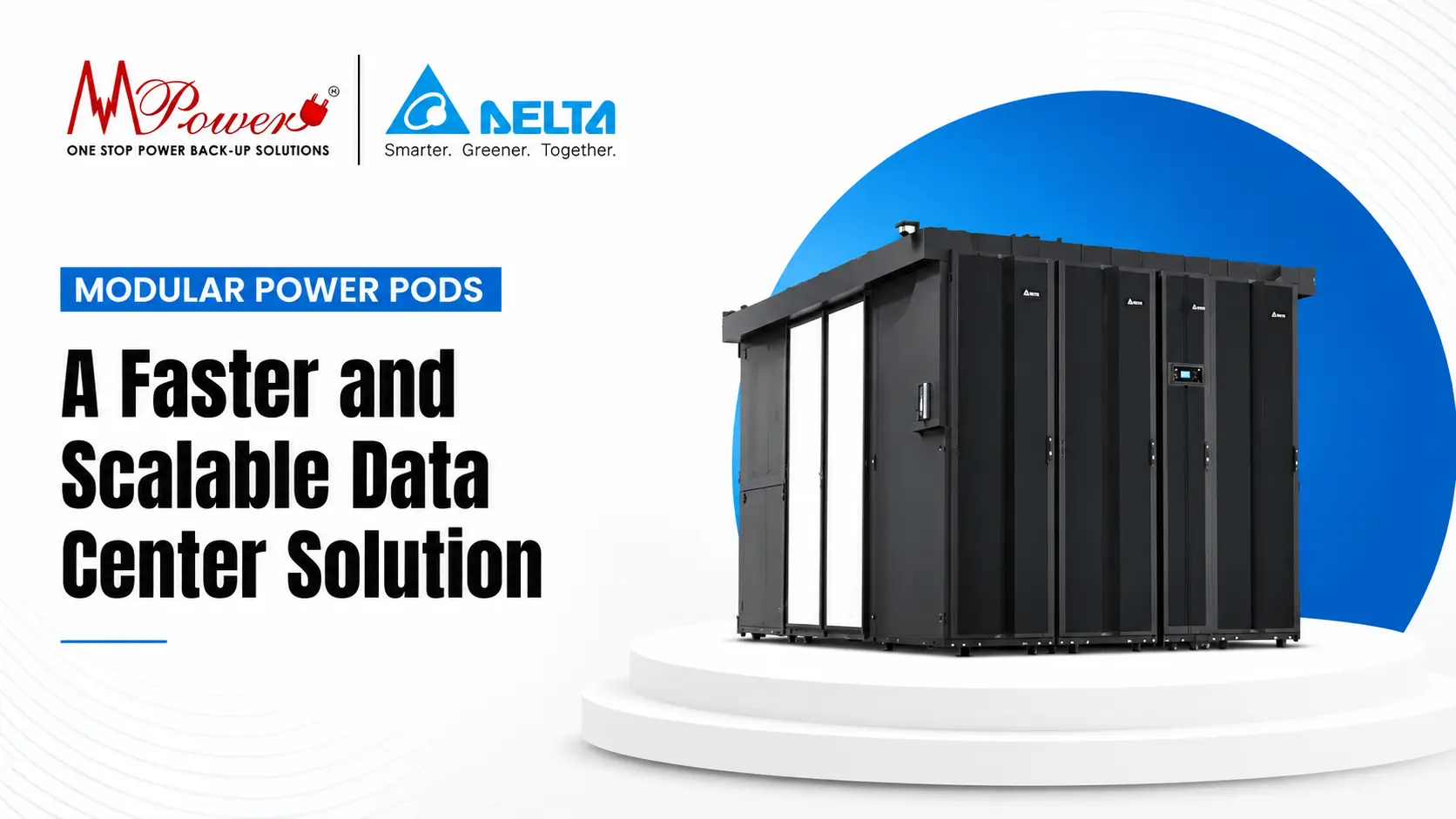
Choose the Right Modular Power Architecture for Your Data Center
Planning a new data center, server room or edge-computing facility? Modular power pods can reduce the complexity of delivering critical power and IT infrastructure by bringing standardized systems together. Mpower helps organizations evaluate Delta's prefabricated Data Center POD solution—with UPS, power distribution, racks, precision cooling, aisle containment and monitoring planned as an integrated architecture.
Looking for an electrical power skid rather than a complete IT pod? This guide explains the difference before you invest in the wrong architecture.
What Is a Modular Power Pod? Understand the Two Common Meanings
The phrase is used for two related—but not interchangeable—infrastructure solutions. Selecting the right type is important because the equipment scope, design team and quotation requirements differ.
Electrical Power Pod or Power Skid
A prefabricated electrical assembly focused on moving electricity from utility supply toward critical loads. Depending on project design, it may contain MV switchgear, transformers, LV switchboards, UPS, busbars, metering and protection systems.
Typical intent: electrical rooms, utility interfaces, power distribution, data center electrical expansion.
Integrated Modular Data Center POD
A coordinated IT environment integrating critical UPS power, rack distribution, server racks, in-row or precision cooling, aisle containment, environment/security monitoring and DCIM. Delta calls its solution the Performance Optimized Datacenter (POD).
Mpower's documented offering: Delta Data Center POD infrastructure and its related systems.
Best starting point: Delta Data Center POD
For enterprise/server-room expansions needing IT racks and the supporting power, cooling, containment and monitoring in one design, explore Mpower's Delta POD product page.
Before RFQ, collect your current IT load (kW), number of racks, expected rack density, runtime and redundancy goal.
Start with the electrical single-line diagram
If your search is for an MV/LV prefabricated electrical skid, define incoming voltage, transformer/switchgear interfaces, fault levels, UPS requirements and site location. Request a feasibility assessment; do not assume a standalone skid is part of Mpower's standard Delta POD scope.
Compare a Micro Data Center with a Containerized Data Center
For small distributed IT environments or space-constrained locations, see Delta Micro Data Center. For packaged infrastructure associated with remote or site-specific deployments, evaluate the Containerized Data Center, subject to site and product configuration.
How a Delta Modular Data Center POD Works
A successful POD design is not simply several products placed beside each other. The electrical chain, battery autonomy, cooling duty, airflow and monitoring must be engineered together for the actual IT workload.
Conceptual overview only; real projects require a site-specific electrical single-line diagram and thermal design. Cooling and DCIM are supporting systems, not literally downstream electrical loads on this diagram.
Critical Power
Use an appropriate online or modular Delta UPS with verified battery autonomy, bypass and power distribution for the protected IT load.
Precision Cooling
Delta RowCool CW is one option within the site's cooling strategy. Selection depends on facility chilled-water availability and detailed heat-load calculations.
Infrastructure Visibility
Rack PDUs, access control, environmental sensors and a DCIM platform can help operators review rack load, temperatures, alerts and maintenance conditions.
Delta Modular Data Center Solutions Available to Explore at Mpower
Instead of generic illustrations, these are real products listed on Mpower's website. Their final configuration, capacity, design and availability are confirmed through technical project review.
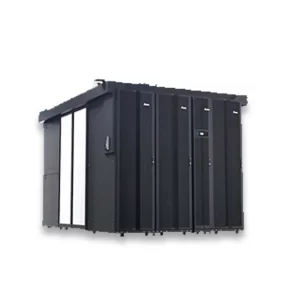
Delta Data Center POD
Coordinated UPS, IT racks, distribution, cooling, containment and DCIM as part of a modular data center approach.
Explore Data Center POD →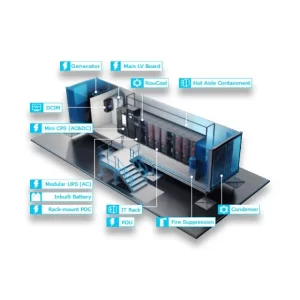
Containerized Data Center
Prefabricated packaged IT infrastructure for applications where site conditions favor an integrated container-style deployment.
Explore Containerized Solution →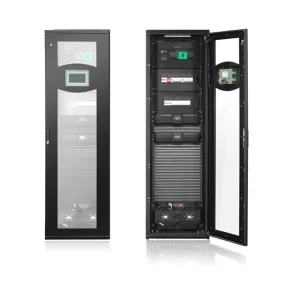
Micro Data Center
Compact, integrated rack-based infrastructure for branch IT, edge computing, smaller server environments and distributed sites.
Explore Micro Data Center →The critical systems that complete your POD design
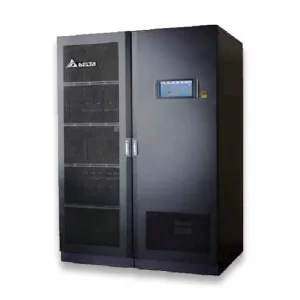
Delta Modulon DPH UPS
A modular UPS family used for scalable critical power; the linked Mpower model range includes 20–80/120 kVA configurations.
See Modular UPS →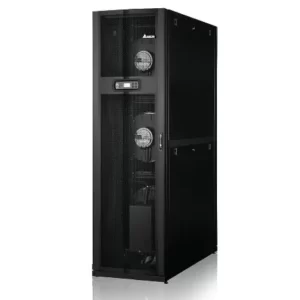
RowCool Precision Cooling
In-row chilled-water cooling for appropriately designed data center thermal-management architectures.
See RowCool CW →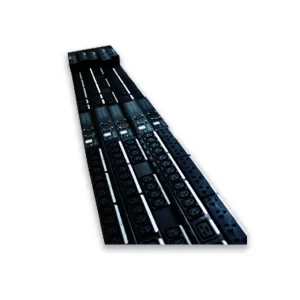
Rack Power Distribution
Rack-level power distribution to equipment; specify outlet counts, phase, amperage, metering and monitoring requirements.
See Rack PDUs →Interactive Data Center POD Capacity Planner
Get an early-stage planning estimate using your rack count, average server/rack draw and anticipated growth. This helps prepare a more productive engineering discussion; it is not a final UPS or cooling selection.
Calculate Your Preliminary IT & Power Requirement
Change the values below; estimates update instantly. No personal details are collected.
Electrical Power Skid vs Modular IT POD vs Conventional Data Center
The correct choice depends on which part of your infrastructure is being expanded. This comparison helps avoid specifications written for the wrong type of project.
| Decision factor | Electrical power pod / skid | Integrated data center POD | Conventional on-site build |
|---|---|---|---|
| Primary scope | Utility-to-load electrical distribution equipment | Protected IT racks plus coordinated power, cooling and management | Site-designed building, electrical, mechanical and IT infrastructure |
| Representative equipment | Switchgear, transformers, LV panels, busbar, UPS (scope varies) | UPS, batteries, rack PDUs, IT racks, in-row cooling, containment, DCIM | Project-specific combination of distribution, UPS, cooling, racks and monitoring |
| Preconfiguration | Equipment can be mounted, connected and pre-tested off site | Systems may be configured and tested as repeatable POD modules | Integration and testing predominantly managed at site |
| Best use case | Electrical capacity expansion or utility interconnection | Enterprise IT/edge or phased data center infrastructure deployment | Highly customized facilities with complex site-specific requirements |
| Expansion strategy | Add compatible electrical power modules or skids | Plan racks, power and cooling modules for later IT growth | Expand within existing building and electrical/mechanical design limits |
| Key RFQ document | Electrical SLD, incoming supply, load schedule, fault levels | Rack/IT load plan, cooling loads, runtime, redundancy, floor layout | Combined civil, electrical, mechanical and IT project brief |
Comparison reflects common industry categories. Final capabilities, implementation times and costs depend on OEM scope, location, codes and project specifications.
Engineering Requirements That Determine POD Performance
Choosing the correct POD solution requires more than adding UPS kVA or counting racks. These are the factors a technical buyer should resolve before requesting a firm budget or delivery schedule.
Power & Redundancy
Document current/peak IT load, incoming supply, generator integration, UPS runtime and whether N, N+1 or 2N architecture is appropriate.
Rack Density & Cooling
Map rack-by-rack kW, airflow containment and cooling technology. Dense AI/HPC loads may require a separate liquid-cooling design, not just more in-row air cooling.
Facility Readiness
Check room dimensions, floor loading, service clearance, transport access, fire systems, drainage and cooling-water/electrical interfaces.
Monitoring & Security
Choose required environmental sensors, power metering, access management, alarm escalation and DCIM or BMS integration.
Commissioning & Testing
Define OEM FAT documentation, installation inspections, functional tests, integrated-systems tests, operator handover and site acceptance criteria.
Growth & Maintenance
Reserve electrical/cooling capacity where justified, identify spare-module strategy, maintenance bypass and routine service responsibilities.
How a Modular Data Center POD Project Is Planned
Prefabrication can reduce onsite work, but there is no universal installation timeline. Site permissions, scope, equipment availability, engineering approvals and commissioning all affect delivery.
Requirement & Site Survey
Review IT load schedule, rack quantity, electrical infrastructure, available room space, site access, operational goals and budget boundaries.
Concept Design & RFQ
Specify UPS capacity and autonomy, redundancy, PDU schedules, rack footprints, containment, cooling methodology, monitoring and responsibilities.
OEM Configuration & Verification
Confirm the available Delta configuration, current model datasheets, bill of materials, interface drawings and factory-test provisions.
Deployment & Site Acceptance
Coordinate electrical and cooling interfaces, perform safety and functional checks, train operations teams and document ongoing service needs.
Project RFQ Checklist: Get a More Accurate Modular POD Quotation
You can use this list internally before speaking with Mpower. More complete inputs help avoid budget assumptions that later require costly scope changes.
Modular Power Pods: Frequently Asked Questions
Answers to common technical and commercial questions about electrical power pods, Delta Data Center POD systems and modular deployments in India.
What is a modular power pod in a data center?
The term may refer to a prefabricated electrical power skid containing switchgear, distribution and UPS equipment, or to an integrated data center POD combining protected IT racks with cooling, containment and monitoring. Always specify which type you need in your RFQ.
Is a modular power pod the same as a modular data center?
Not always. Electrical power skids focus on the electrical supply chain. A modular data center or IT POD also addresses racks, environmental control, monitoring and related critical systems. The two may be used together on larger projects.
What is included in the Delta Data Center POD solution?
Depending on configuration, a Delta POD can combine UPS/battery backup, distribution and rack PDUs, IT racks, precision cooling, hot/cold aisle containment and DCIM/environmental monitoring. The exact scope is project-specific.
Does Mpower supply electrical MV/LV power skids?
Mpower's published catalogue documents Delta's integrated Data Center POD and related critical power infrastructure. A standalone electrical skid should be treated as a separate enquiry; availability and engineering scope must be verified rather than assumed.
How do I calculate the size of a modular data center POD?
Begin with rack-by-rack IT load in kW, diversity, planned growth, redundancy and battery runtime. Then develop separate UPS, electrical distribution and cooling designs. The interactive planner on this page provides only an initial IT and apparent-load estimate—not a final design.
Can modular data center PODs be expanded later?
They can be planned for modular expansion, but additional capacity is limited by available power, cooling, floor area, containment, network connectivity and the supported OEM configuration. Plan growth during the initial design to avoid expensive changes.
What is the difference between N+1 and 2N redundancy?
N+1 means enough capacity for the required load plus one additional redundant unit or module in a defined subsystem. 2N generally means two full independent capacity paths. The terminology must be applied to specific electrical and mechanical systems, not used as a blanket uptime guarantee.
What does Uptime Tier III Ready mean for the Delta POD?
Delta reports Tier III Ready design recognition for its POD architecture. Recognition of a prefabricated design is not equivalent to Tier III certification of a completed Mpower customer facility. Final facilities require their own site-specific review and certification process.
Are these PODs suitable for AI and GPU servers?
They may be considered for AI/compute applications when the proposed electrical and thermal architecture supports the target rack densities. High-density GPU deployments often need detailed liquid-cooling, CDU, water-quality and heat-rejection assessments; a standard air-cooled POD should not be assumed suitable.
How long does it take to deploy a modular POD?
Deployment varies by product availability, project size, site readiness, permissions, engineering scope, delivery and commissioning. Prefabrication can reduce work at the destination compared with conventional site-built construction, but Mpower should quote a schedule only after reviewing requirements.
What determines modular data center POD pricing?
Major drivers include rack count and power density, UPS and battery configuration, redundancy, cooling strategy, aisle containment, control systems, fire/security integration, delivery and site installation. Request a project-specific bill of materials rather than relying on a generic cost per rack.
Where can I enquire about Delta modular data center solutions in India?
Contact Mpower India through its Delta POD product listing, or use the project consultation/WhatsApp options below. Share your project location, rack and power requirement, required runtime and cooling concept for a productive first discussion.
Plan the Right Modular POD for Your IT Infrastructure
Share your load, rack count, redundancy requirements and site location. Request guidance on the appropriate Delta POD configuration and supporting power/cooling products.